Booking choice: The Rialto Market lunch tour, from $108 per person. Check dates Tour details
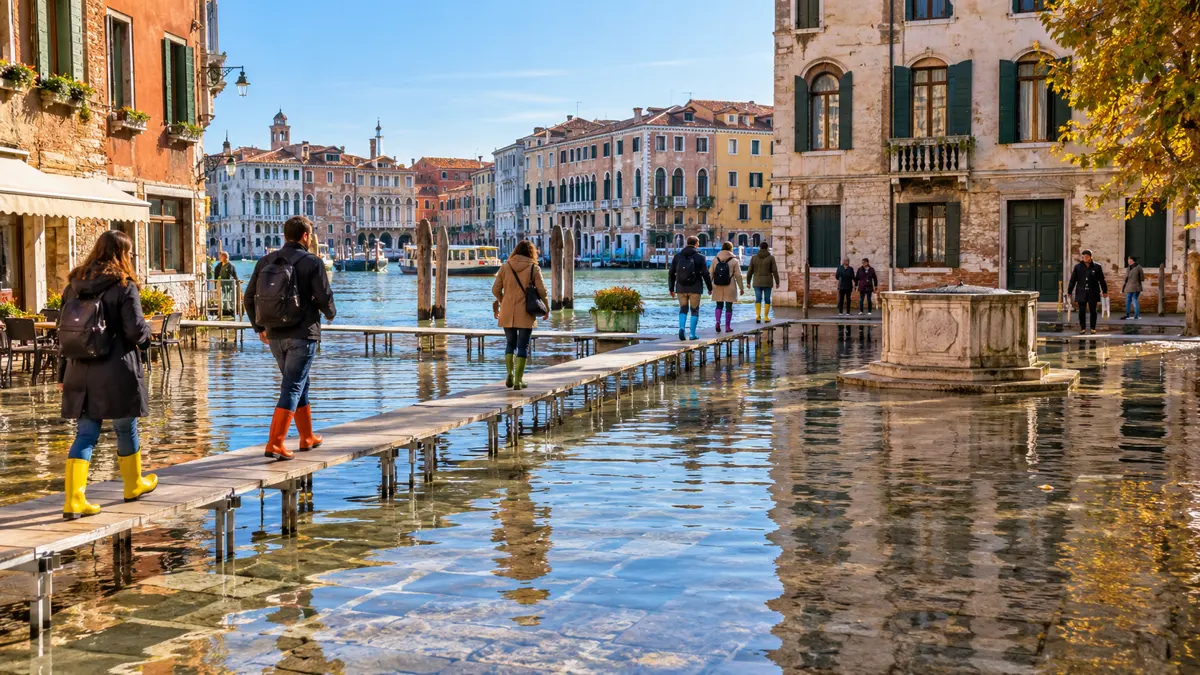
Acqua alta is the high tide that spills over the pavements of Venice. It comes with the moon, a southern sirocco wind and low pressure over the Adriatic, mostly between October and January. MOSE, the barrier system at the lagoon inlets, has kept the big floods out since 2020. The small ones still reach the Rialto market.
That matters if you plan to be at the Pescheria at 8 a.m. in November. It rarely ruins a trip. Wet feet for an hour or two, mostly.
The quick answer
Expect high tides from October to January, most often in November and December. MOSE closes the lagoon when the city faces a tide of about 110 cm, but the Erbaria by the Rialto Bridge goes under at 75 to 80 cm, so the market side can flood while the barriers stay down. Floods last a few hours around the peak. A few tours on this site cancel or reroute in exceptional tides, and every one cancels free up to 24 hours before.
When is acqua alta season in Venice in 2026-27?
From October to January, with the most high tides in November and December. Spring tides plus a sirocco wind make the worst days.
The city's tide forecasting centre, the Centro Previsioni e Segnalazioni Maree, measures every tide against the reference zero at Punta della Salute. Normal tides swing well below any pavement. Autumn storms push water into the lagoon from the Adriatic, and when that lines up with a full or new moon, the sea comes up through the drains.
The record is 187 cm on 12 November 2019, before MOSE worked. Winter 2026 was busy in a new way: the barriers were raised 18 times between 28 January and 11 February, which Alvise Papa of the tide centre called entirely unusual, according to Il Post. In his words, twenty years ago it took a run of bad weather to flood the city, "oggi bastano precipitazioni anche modeste".
| Month | High tide risk | Our take |
|---|---|---|
| October | Moderate, rising | Pack light boots |
| November | Highest | Check the forecast daily |
| December | High | Morning floods are common |
| January | Moderate | Still worth checking |
| February to September | Low | Rare, short events |
How high is the Rialto area, and when does it flood?
Low. The Erbaria, the waterfront by the market, goes under at tides of 75 to 80 cm, about the same as St Mark's Square.
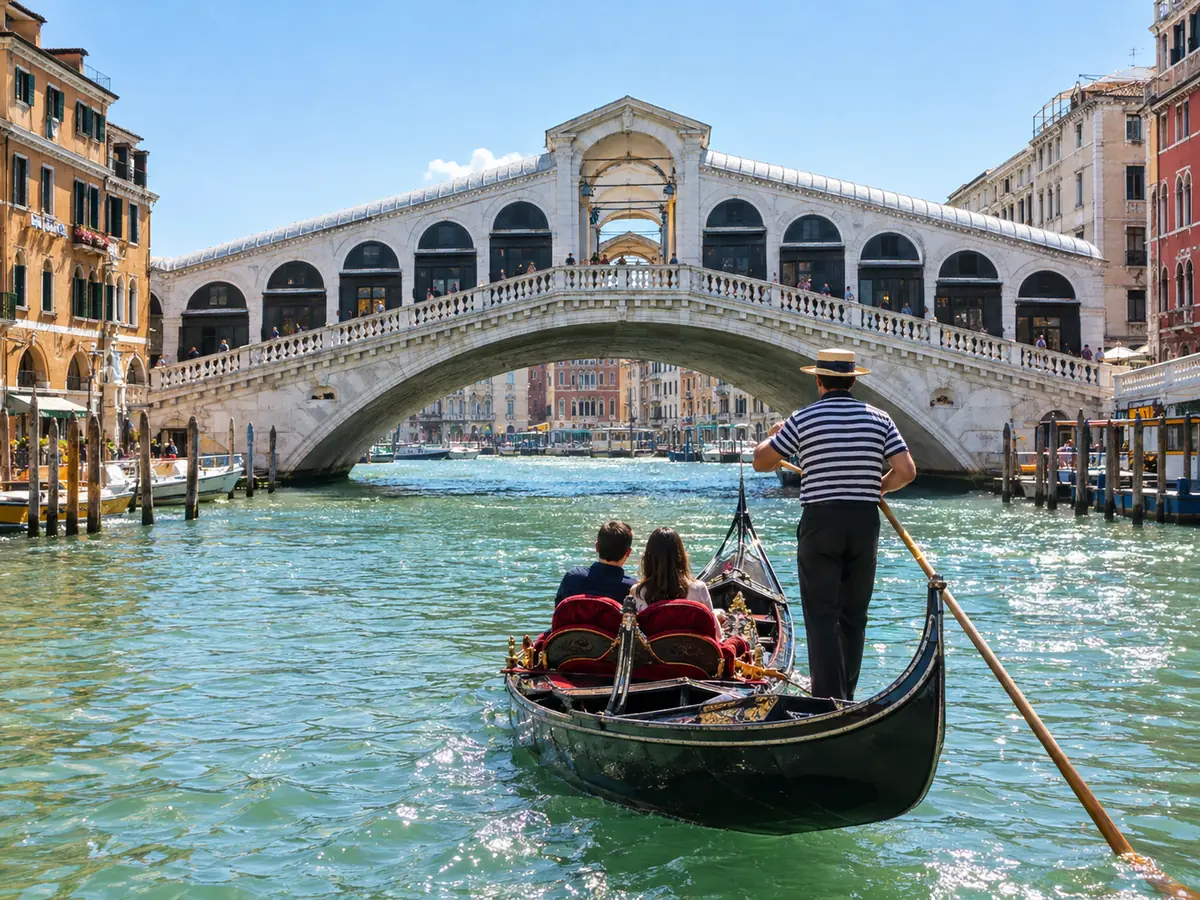
Il Post puts it bluntly: a tide above 75-80 cm is enough to put "la zona dei locali vicina al ponte di Rialto (l'Erbaria) e piazza san Marco" under water. The Erbaria is the strip of bars and stalls along the Grand Canal on the San Polo side, right where the market meets the bridge. The fish market behind it and the Riva del Vin sit on the same low ground. The bridge itself is high and dry: the ramps climb well above any tide.
For the rest of the city, the tide centre publishes how much of the pedestrian network floods at each level. At 100 cm about 5% of walkways are wet. At 120 cm it is close to 29%, and at 140 cm more than half, according to the centre's figures as summarised on Wikipedia. Rialto is in the first few percent.
| Tide at Punta della Salute | Walkways flooded (city) | Around Rialto |
|---|---|---|
| Up to 90 cm | About 2% | Erbaria starts to flood from 75-80 cm |
| 91-100 cm | 5.17% | Erbaria and Riva del Vin wet |
| 101-110 cm | 14.05% | Market side wet; MOSE may close |
| 111-120 cm | 28.76% | MOSE should be up |
| 131-140 cm | 54.40% | Only seen if MOSE stays down |
Does MOSE stop acqua alta at Rialto?
It stops big floods, not small ones. The protocol aims to keep the city below 110 cm, so tides of 80 to 105 cm still wet the Erbaria.
The rule, as Il Post reports it: MOSE is raised to stop the tide in the city reaching 110 cm, and because forecasts can miss by about ten centimetres, it goes up when the forecast says 101 cm or more. Each raising costs around EUR 200,000. Below that line, the barriers stay on the seabed and the low parts of Venice flood as they always have.
In practice: a 90 cm morning in November means water at the Erbaria and in St Mark's Square, while most of the city stays dry. Plan your market visit for later in the morning on those days, after the peak has passed. Floods usually drain within two or three hours.
How do you check the tide forecast and read the sirens?
The tide centre publishes forecasts online, and sirens sound a few hours before tides of 110 cm or more, with one to four rising tones for the expected height.
The Comune's tide page carries the forecast for the next days, the live level and alerts. When a tide of 110 cm or more is expected, sirens across the city sound about three hours ahead. The first sound is a general warning. The second tells you how high: one tone for over 110 cm, two for over 120 cm, three for over 130 cm and four for over 140 cm, per the description on Wikipedia.
With MOSE in service, the sirens are less common than they were. A 90 cm tide does not set them off, and that is the level that matters at Rialto. Check the forecast the evening before.
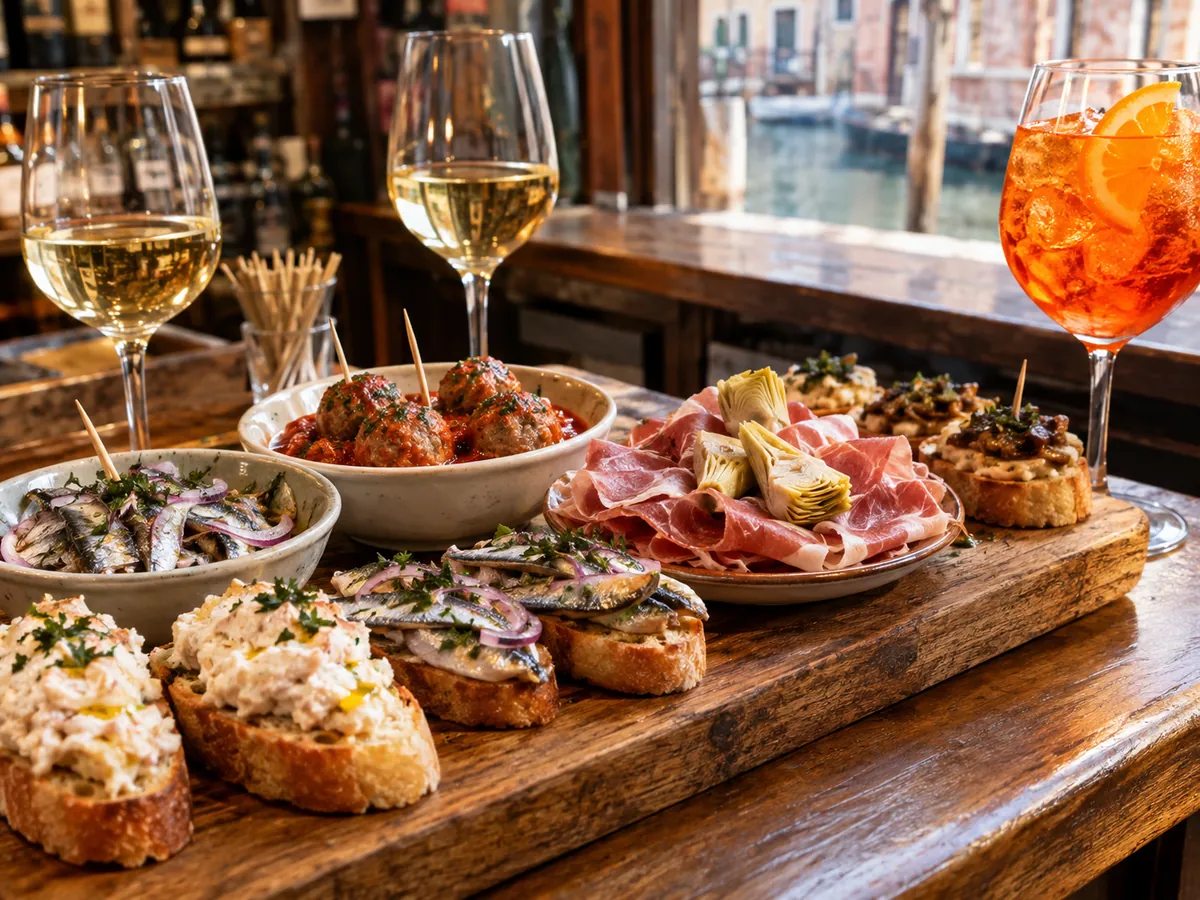
Four hours of market stalls, cicchetti and wine. The lunch runs rain or shine, and starts at 10:45, after most morning peaks.
Check dates for the Rialto Market lunch tourDo you need rubber boots, and where are the passerelle?
Ankle-high water is common at Rialto in a flood, so waterproof boots help. The city lays raised walkways on main routes, but not always.
The passerelle are trestle walkways set up on key routes when a high tide is due. They are narrow and slow, one person wide in places, and on crowded days they back up. During Carnival 2026 the service was suspended in many areas because of the crowds, Il Post reported. Do not count on them.
Simple plastic overboots are sold in shops and kiosks across the centre on flood days. Proper rubber boots are better if you are staying a week in November. Wait it out with a coffee if you can: the water is gone a few hours later, and the bacari by the market open again as soon as it drains. Our guide to cicchetti bars near Rialto lists the classic ones.
Which Rialto tours cancel in high water?
Four listings name high tide: the San Marco to Rialto walk, the San Marco shared gondola, the Piazzale Roma private gondola and the cicchetti walk's traghetto.
From the listings on Viator, checked 22 October 2026:
- The San Marco to Rialto walking tour does not run in exceptional high tide. It moves to the next day or you get a refund.
- The shared gondola from San Moisè does not run in exceptionally bad weather or high or low tide, with the same postpone-or-refund rule.
- The private gondola from Piazzale Roma may be cancelled by the supplier in exceptional high tide or heavy rain, with a full refund.
- The cicchetti and wine walk skips its traghetto crossing in bad weather or high water. The guide walks you round instead and the food stops stay the same.
The Rialto Market lunch states it takes place rain or shine. Read the fine print on boats: the motorboat tour says weather cancellations by the boat operator are not refunded. A guest of the Rialto gondola wrote in 2023 that gondolas were not running in rain and wind, and the refund was refused because the booking had not been cancelled 24 hours ahead. Our rule for November: check the tide forecast two days out, and use the free 24-hour cancellation if it looks high. More on rides in our gondola price guide.
A long market lunch with wine at every stop, starting at San Giacomo di Rialto. It runs whatever the weather does.
Explore the Rialto Market lunch tour Tour detailsFrequently asked questions
Does the Rialto Bridge flood?
No. The bridge climbs well above any tide. The Erbaria and the market at its San Polo end flood from about 75 to 80 cm, which happens several times most winters.
When is acqua alta most likely in Venice?
In November and December. The season runs from about October to January, and floods usually last two to three hours around the peak.
Why does Rialto flood when MOSE is working?
MOSE is raised for forecasts of about 101 cm or more, to keep the city below 110 cm. Lower tides still flood the lowest areas, and the Rialto market is one of them.
Will my tour be cancelled because of acqua alta?
Only in exceptional tides, and only some tours: the San Marco walk and gondola rides can be postponed or refunded. All tours on this site cancel free up to 24 hours before.
Ready to book
Choose your tour
Free cancellation up to 24 hours before on every option. Prices are from-prices in USD and move with the season.
Rialto Market Food and Wine Lunchtime Tour
- A lunch of cicchetti and small plates
- Wine or spritz at each stop
- Rialto Market walk with a local guide
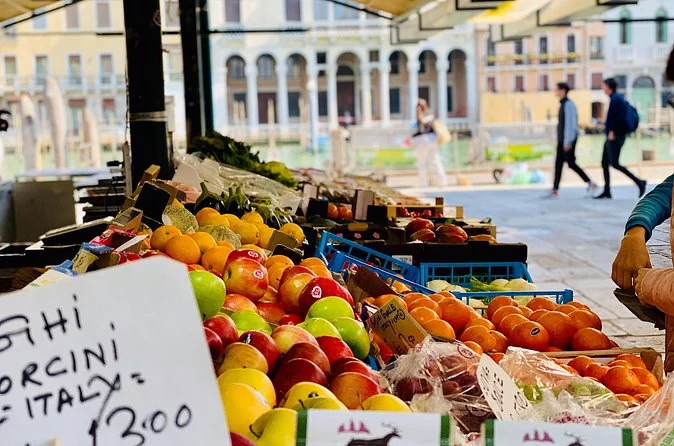
Venice Street Food Tour with Market Visit
- Food tastings at about five stops
- Rialto Market visit (fish stalls shut on Mondays)
- Local guide
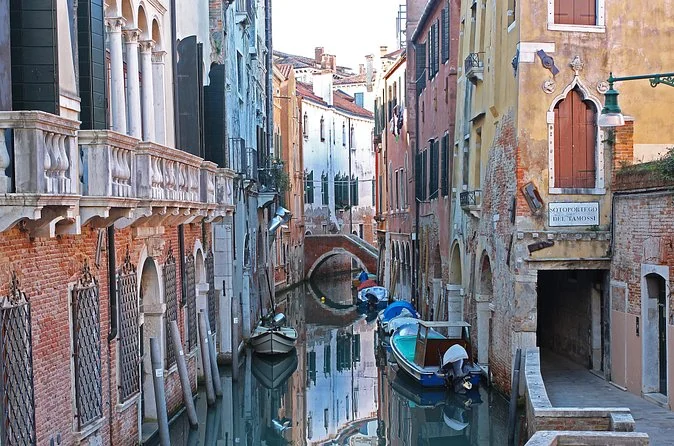
Real Hidden Venice Walking Tour
- A native Venetian guide
- Small group, or private if you prefer
- A city map for each guest